A screenshot-evidenced Azure infrastructure case study covering governance, hub-and-spoke networking, private VM access, load balancing, Key Vault, and backup configuration.
TechNova Inc. is a growing Canadian tech startup. They've outgrown their on-premise servers and need to move to the cloud โ but they need it done right. Secure. Scalable. Cost-efficient. Resilient enough to survive failures without going offline.
For this case study, I worked from a blank Azure subscription and a business-style scenario: design and deploy a secure, segmented, cost-aware Azure infrastructure foundation. The goal was to show the planning and implementation thinking expected from an Azure or cloud administrator.
The build moves from governance to networking, compute, access, load balancing, and backup evidence. Every phase is tied to Azure Portal screenshots so the project can be reviewed without relying only on claims. This is that story.
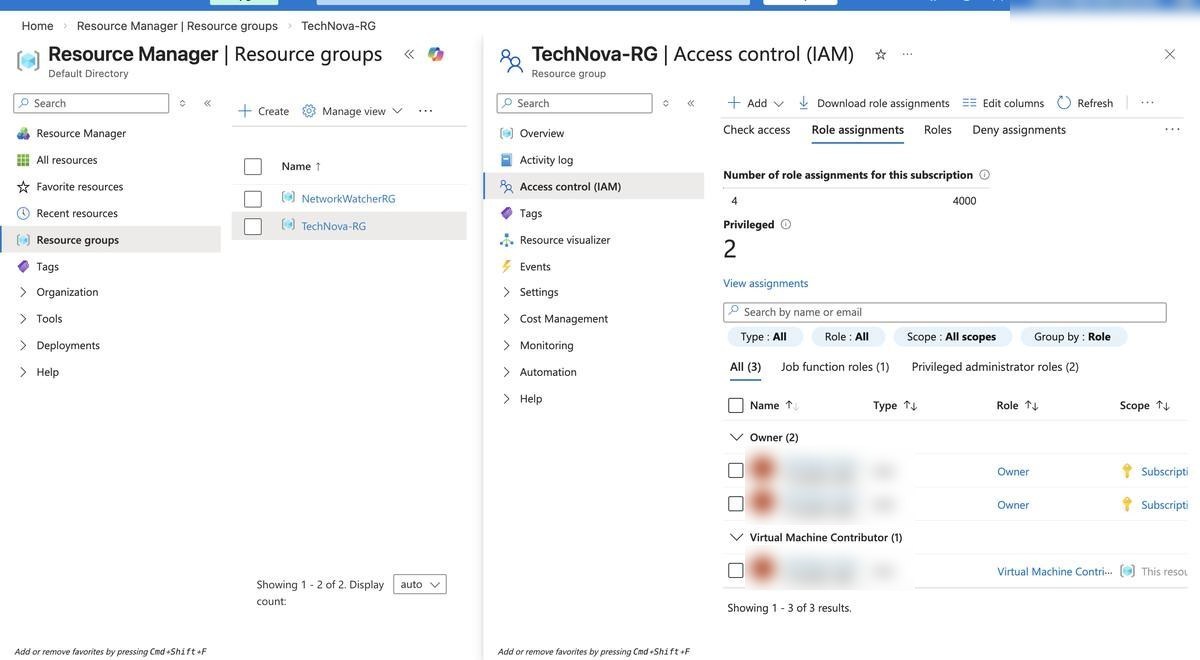
Deploy workload VMs without direct public exposure. Use Bastion for management access, NSGs for subnet control, and RBAC review for resource-scope access.
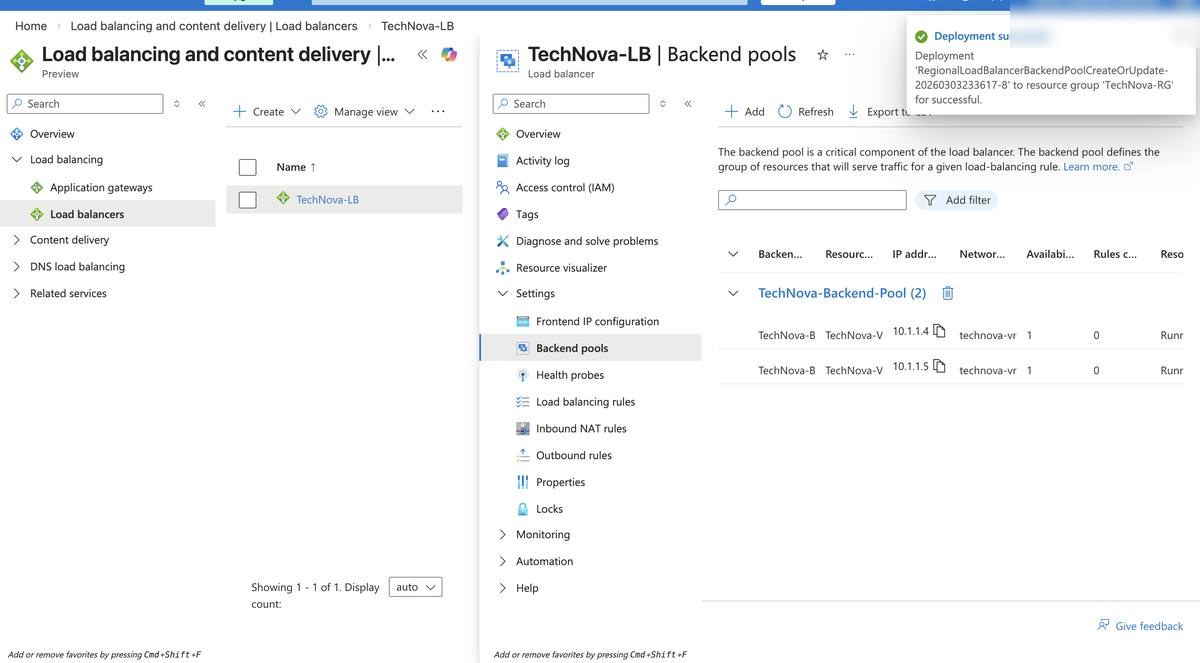
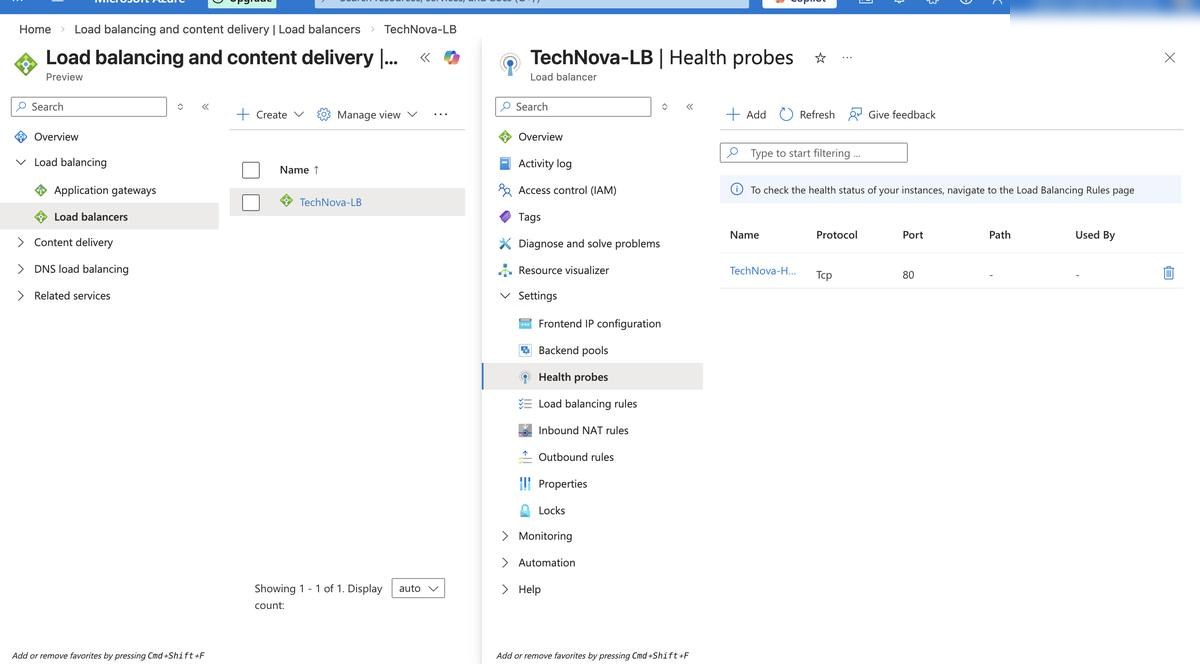
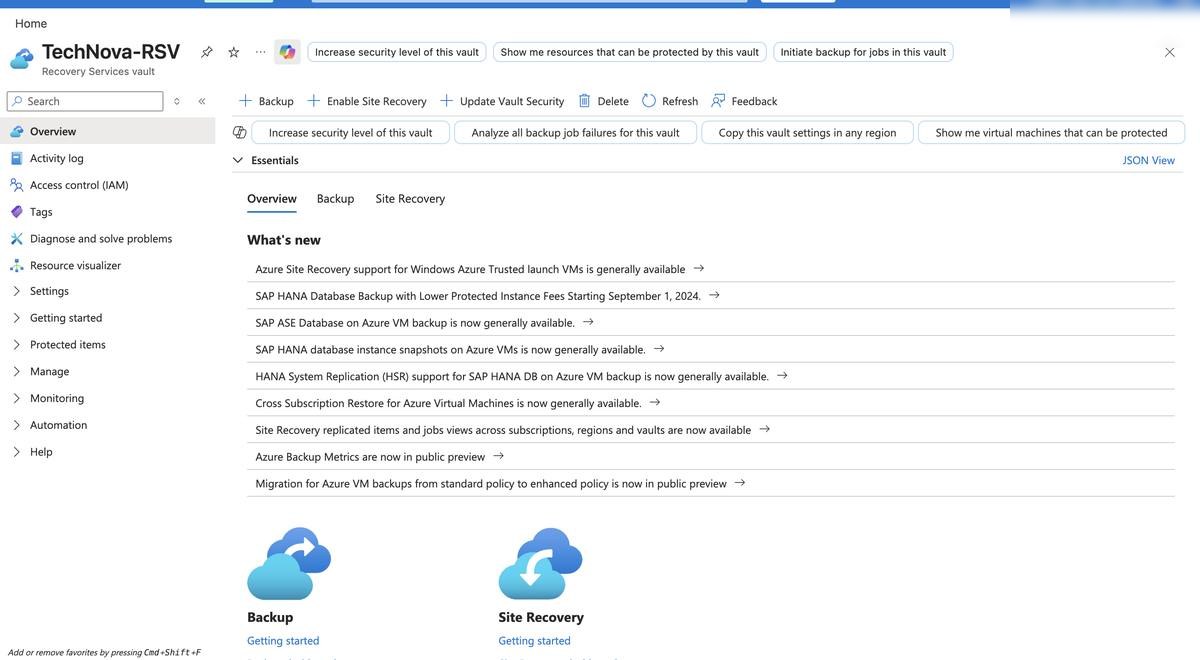
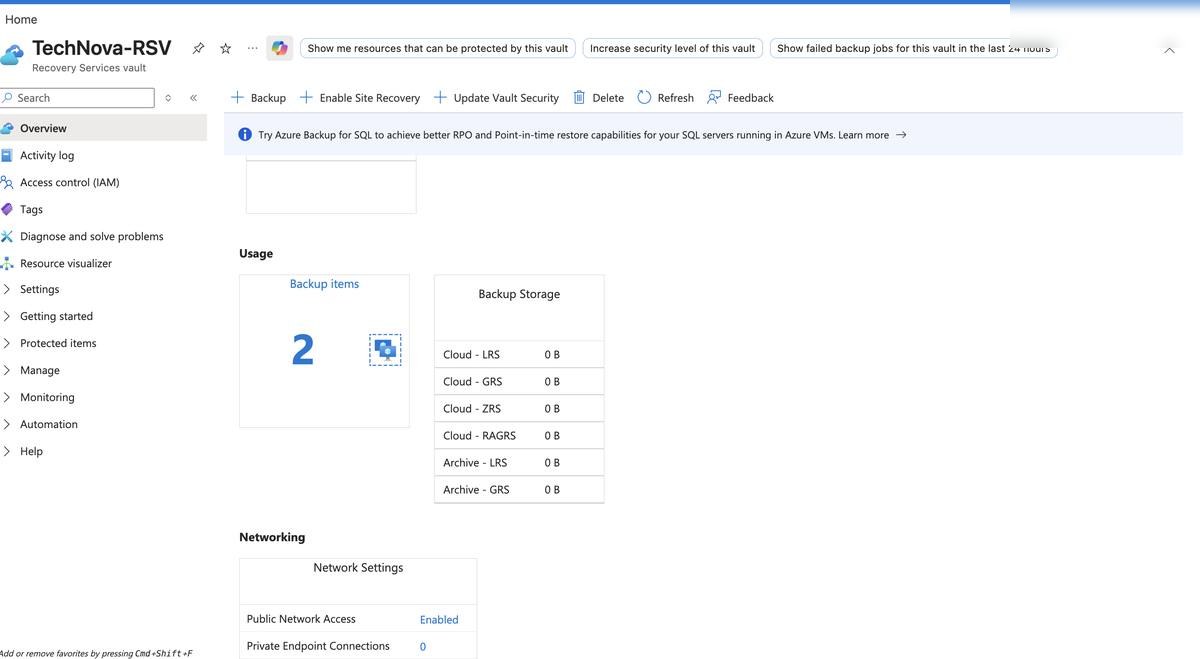
Reduce single-VM dependency with a Load Balancer, backend pool, health probe, Recovery Services Vault, and backup policy evidence.
Build a cost-aware lab environment with budget tracking, tagging, lab-sized VM choices, and cleanup planning from day one.
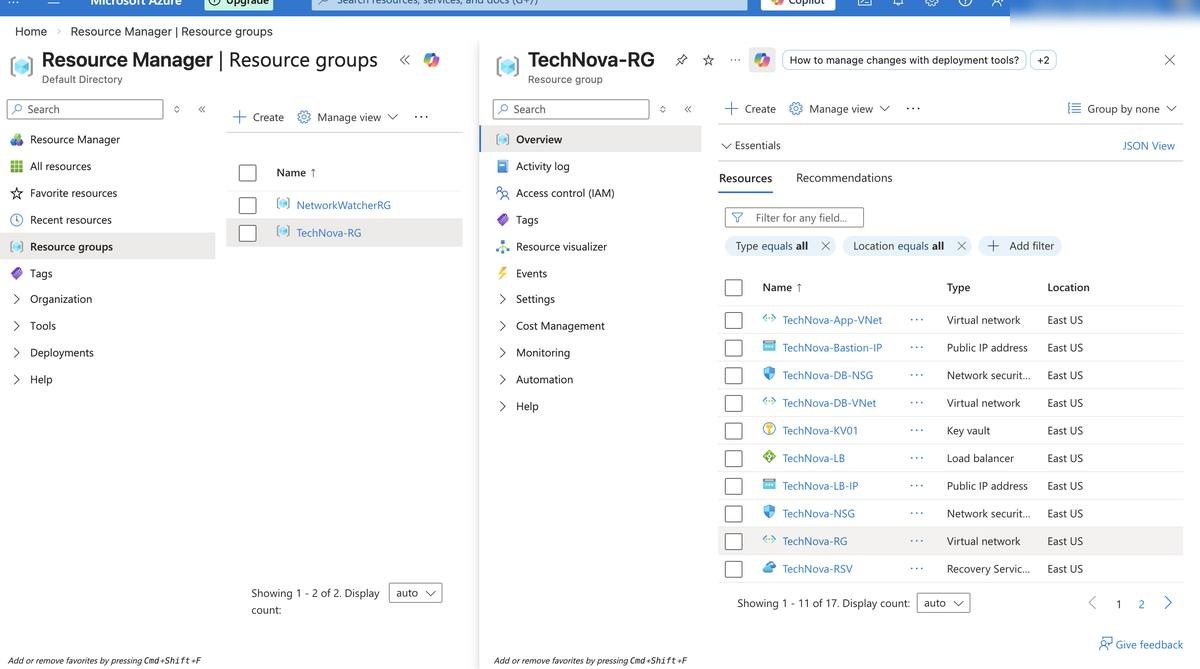
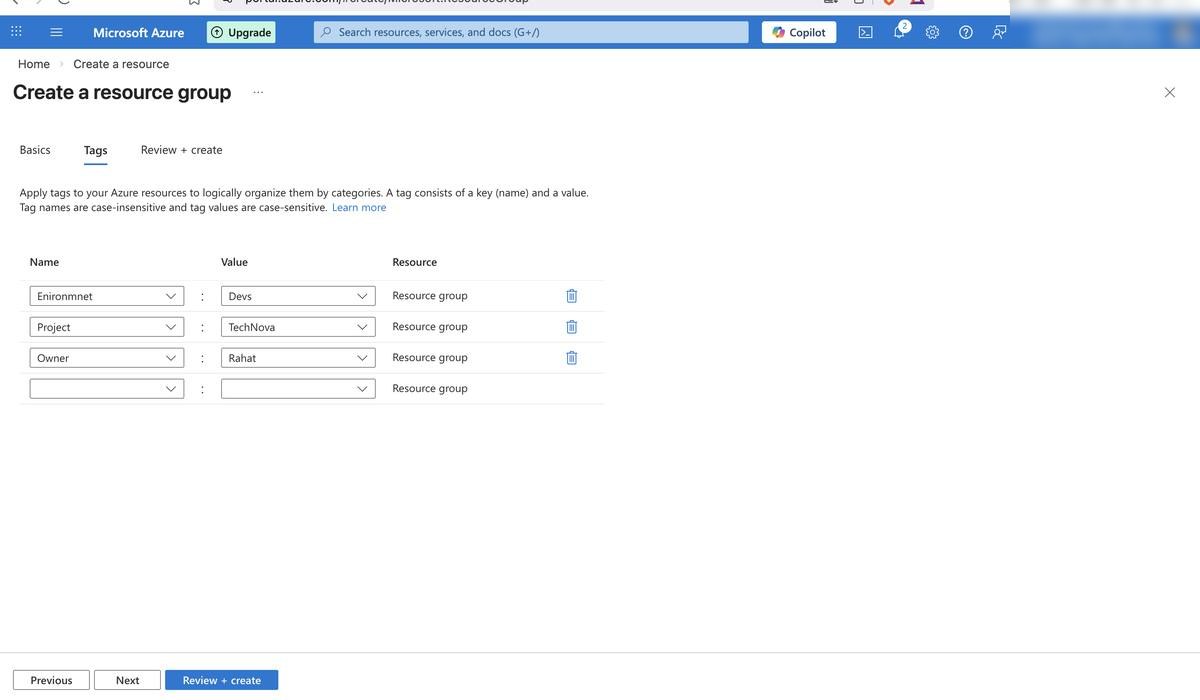
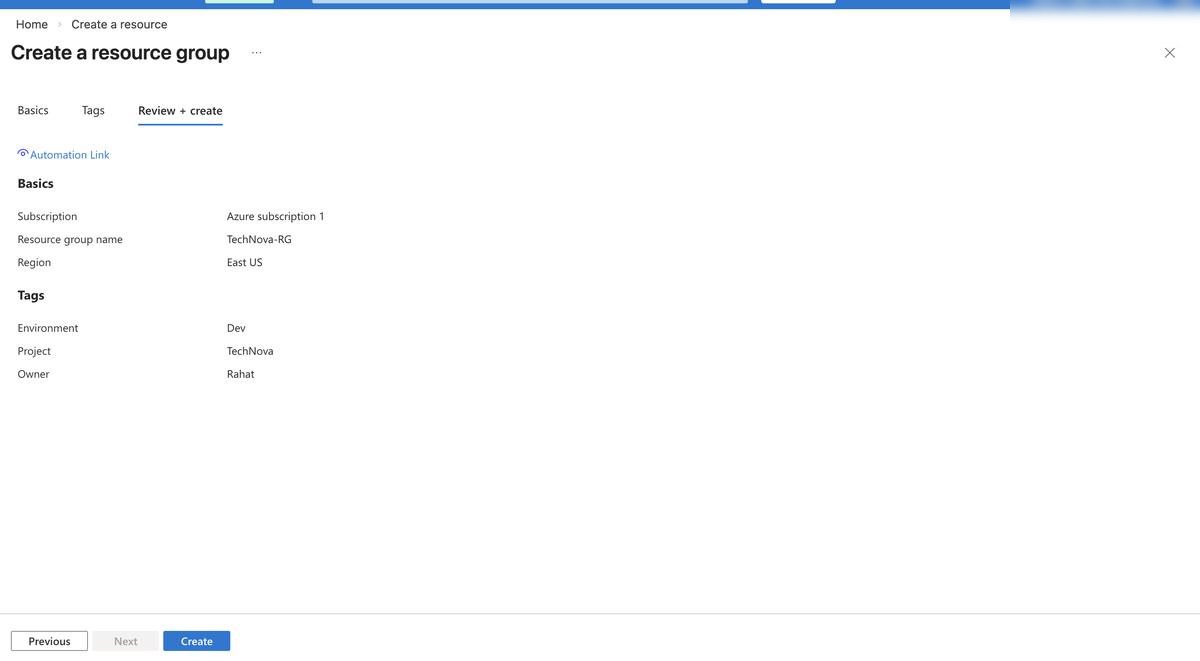
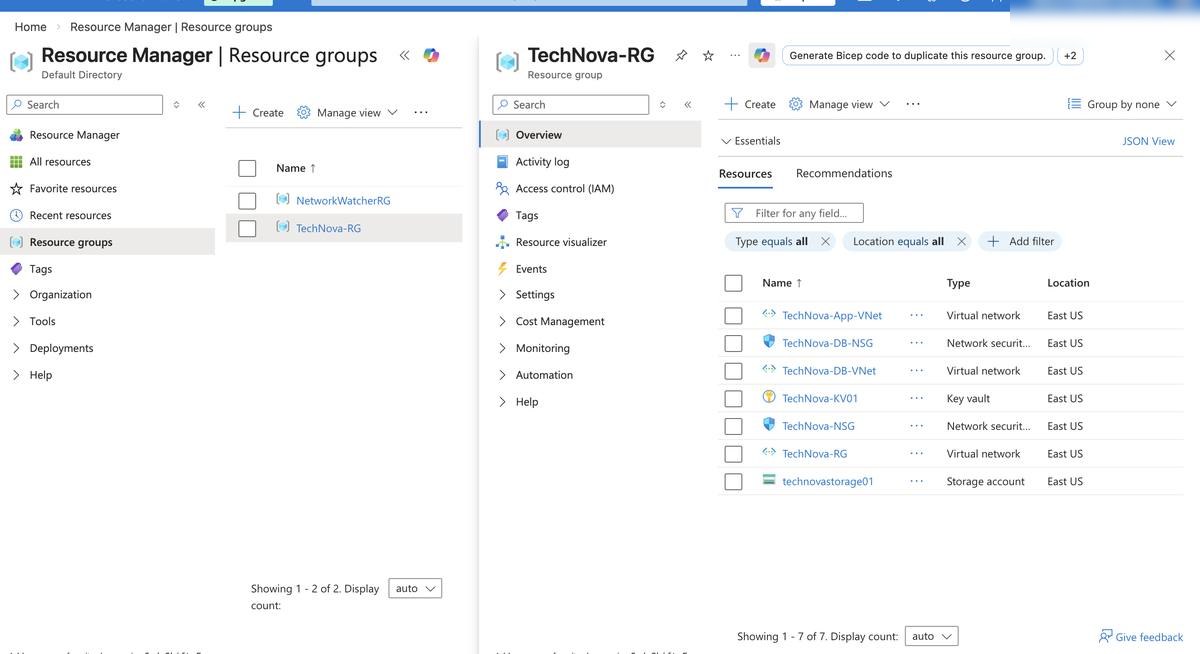
Before deploying a single resource, the house needed a structure. A dedicated Resource Group was created with consistent naming conventions and tags โ Environment, Project, Owner โ so every resource is traceable, billable, and manageable from day one.
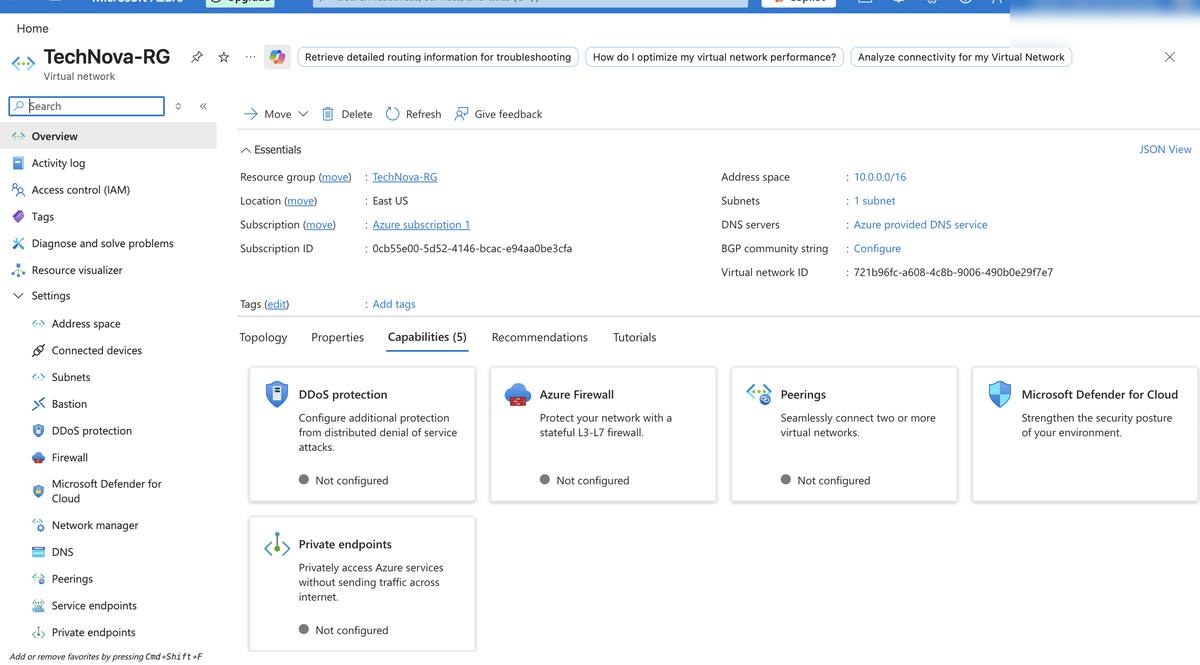
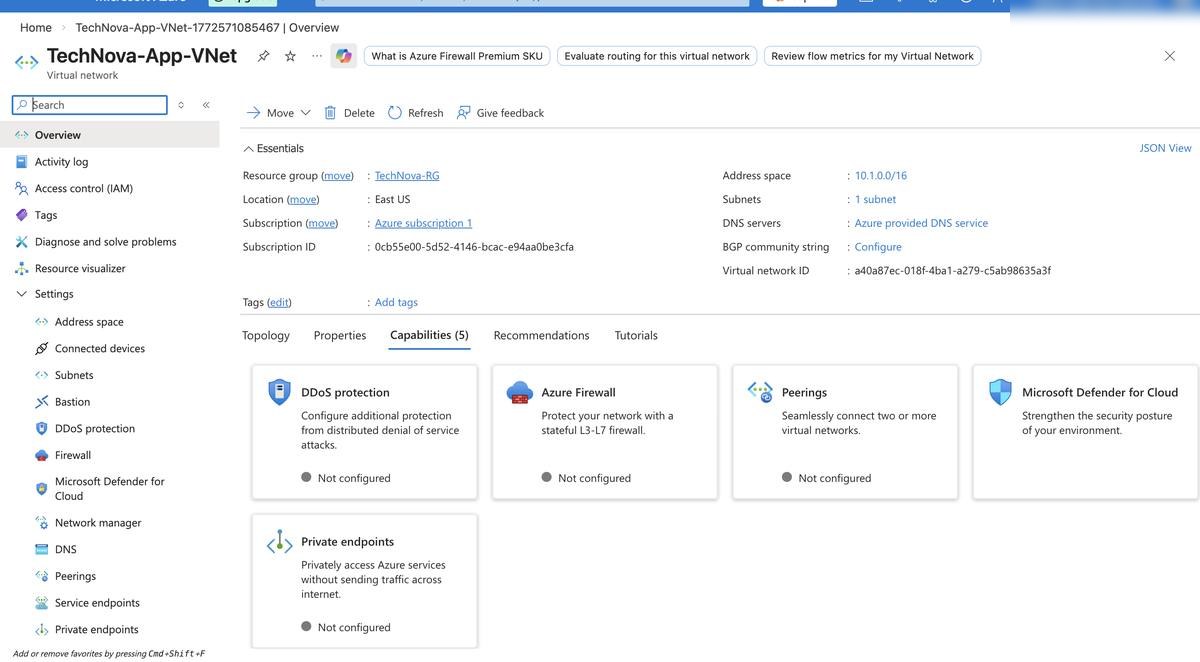
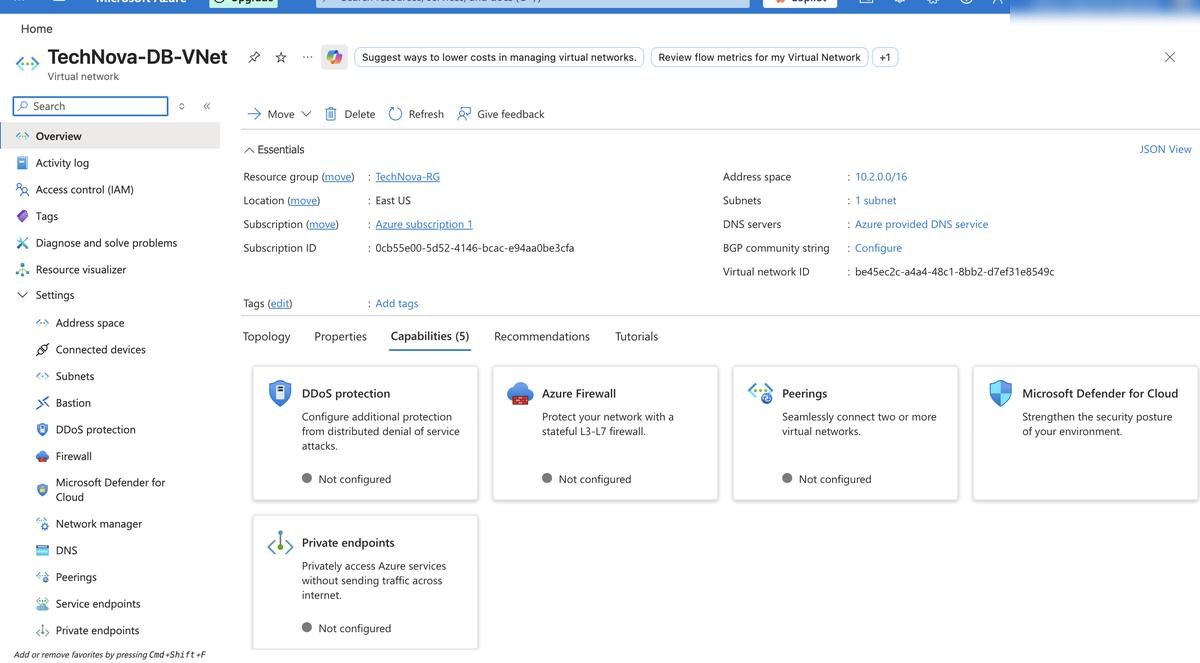
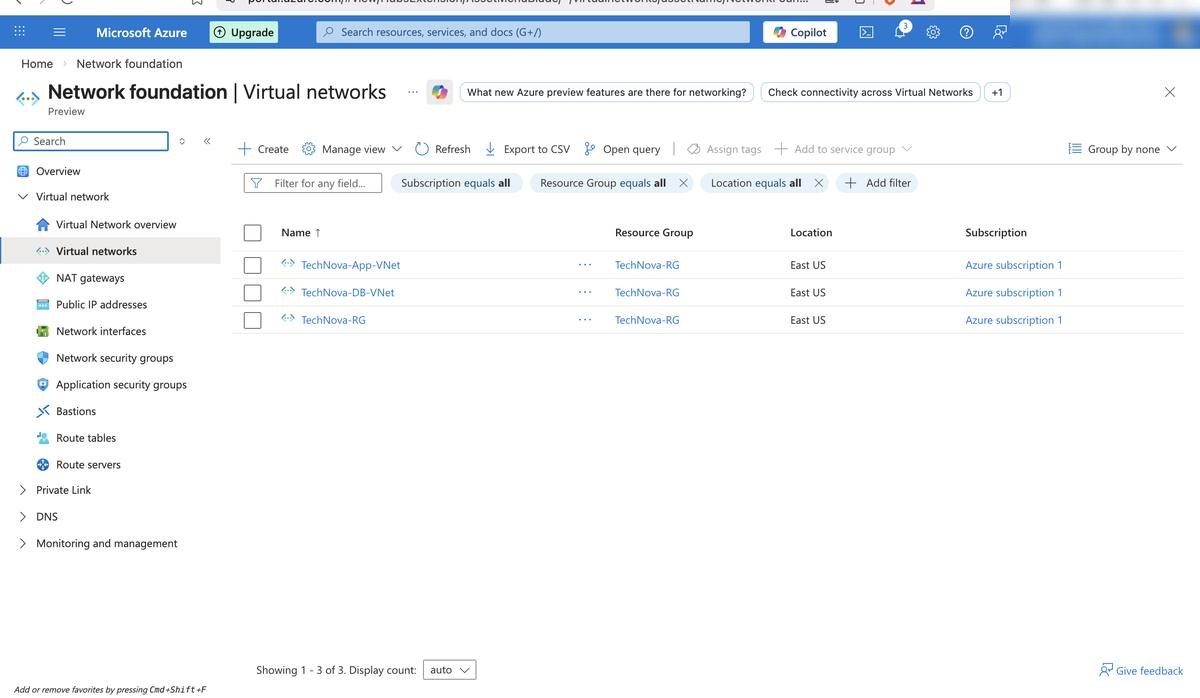
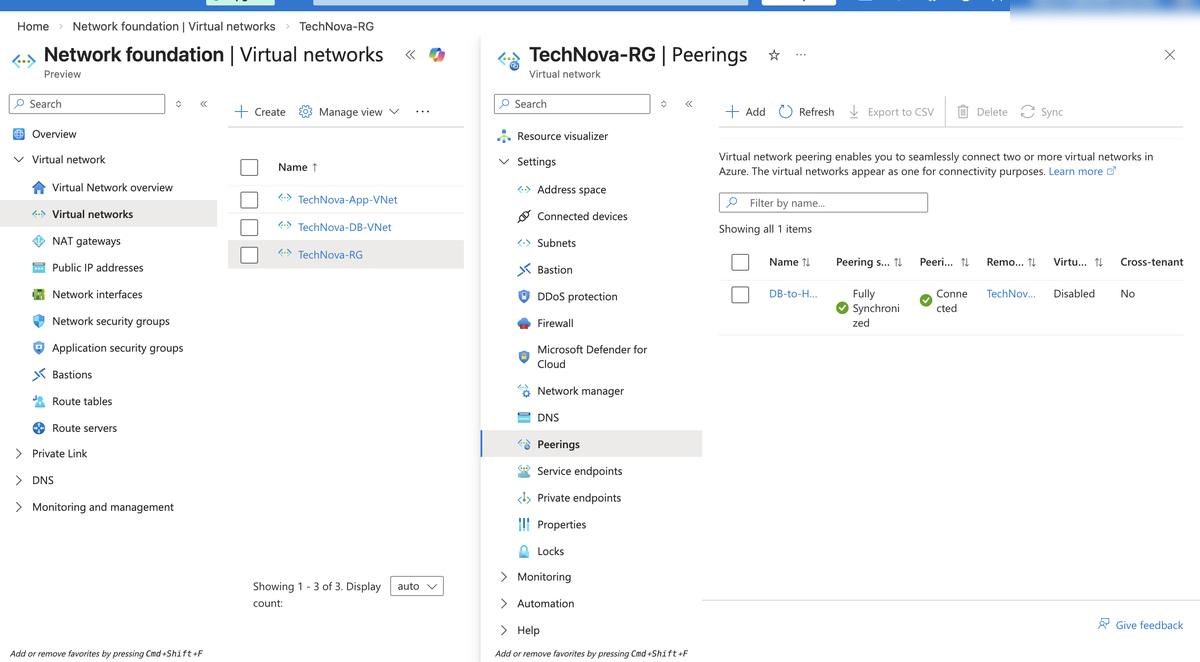
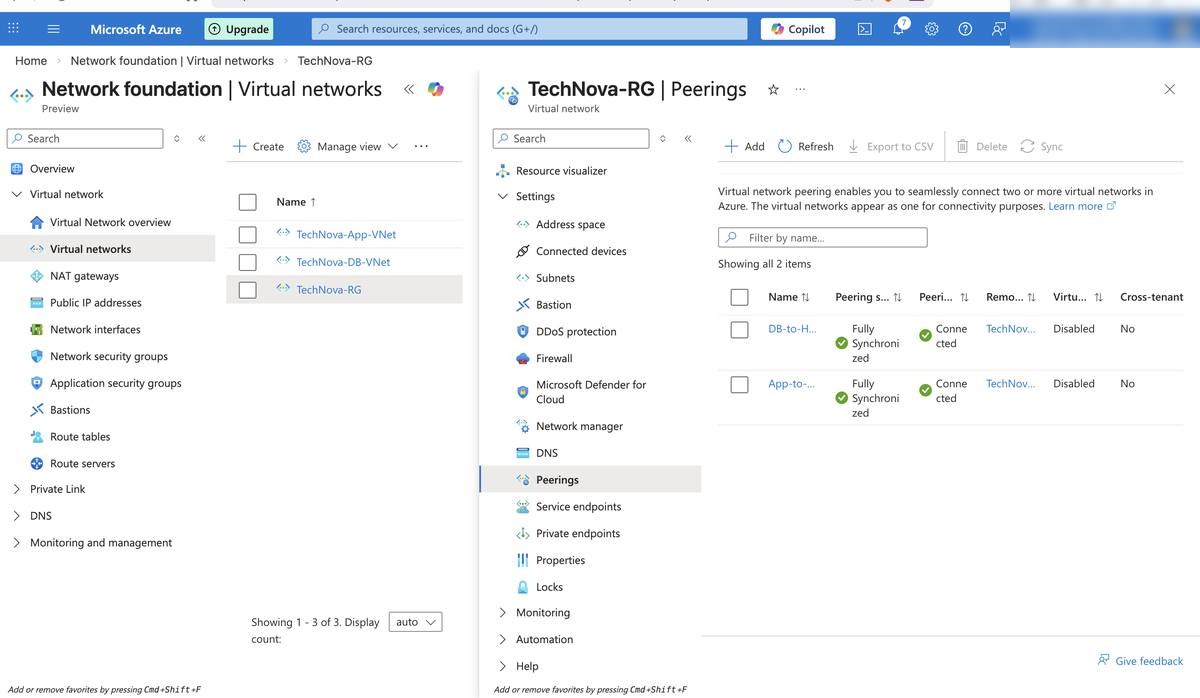
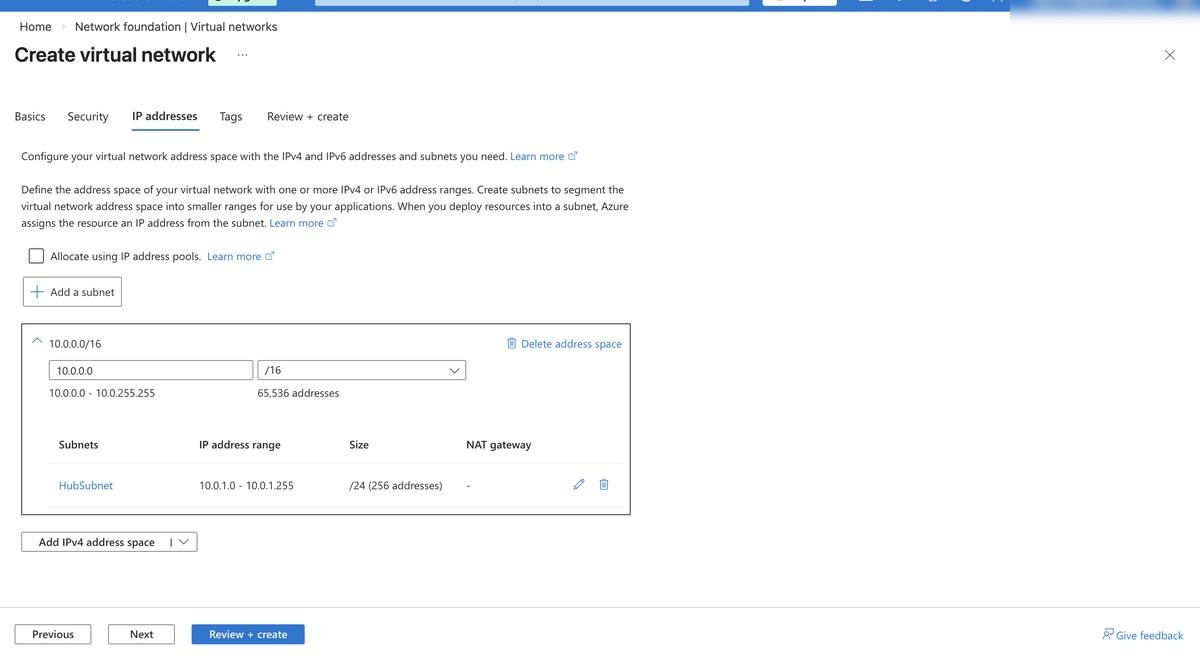
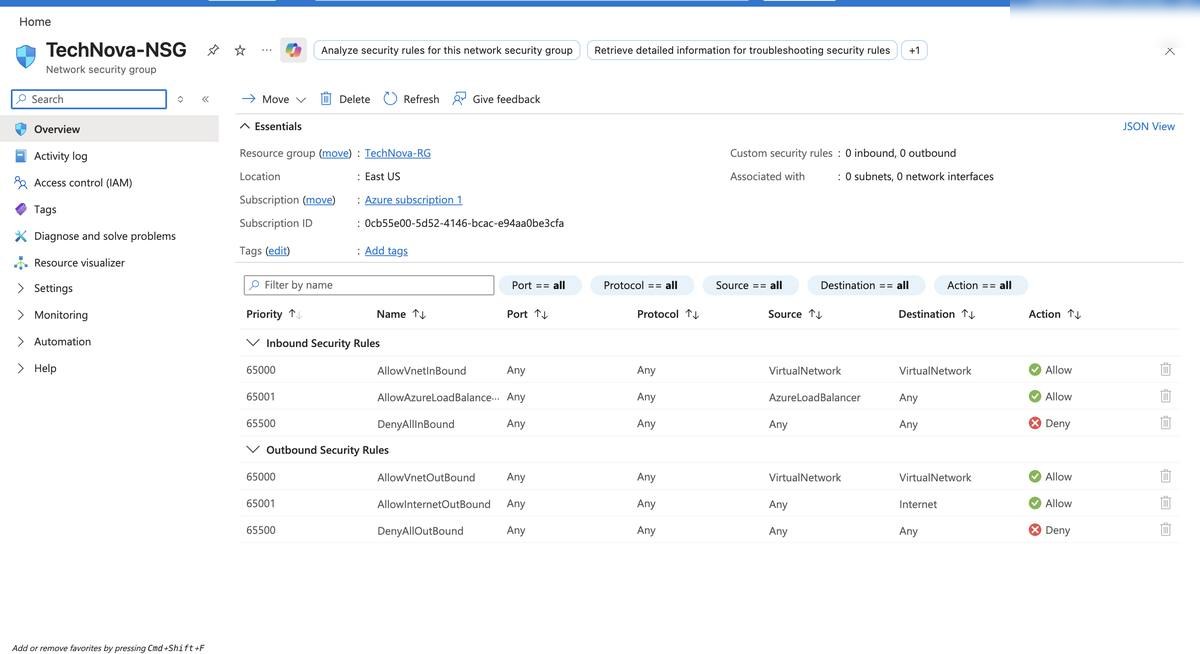
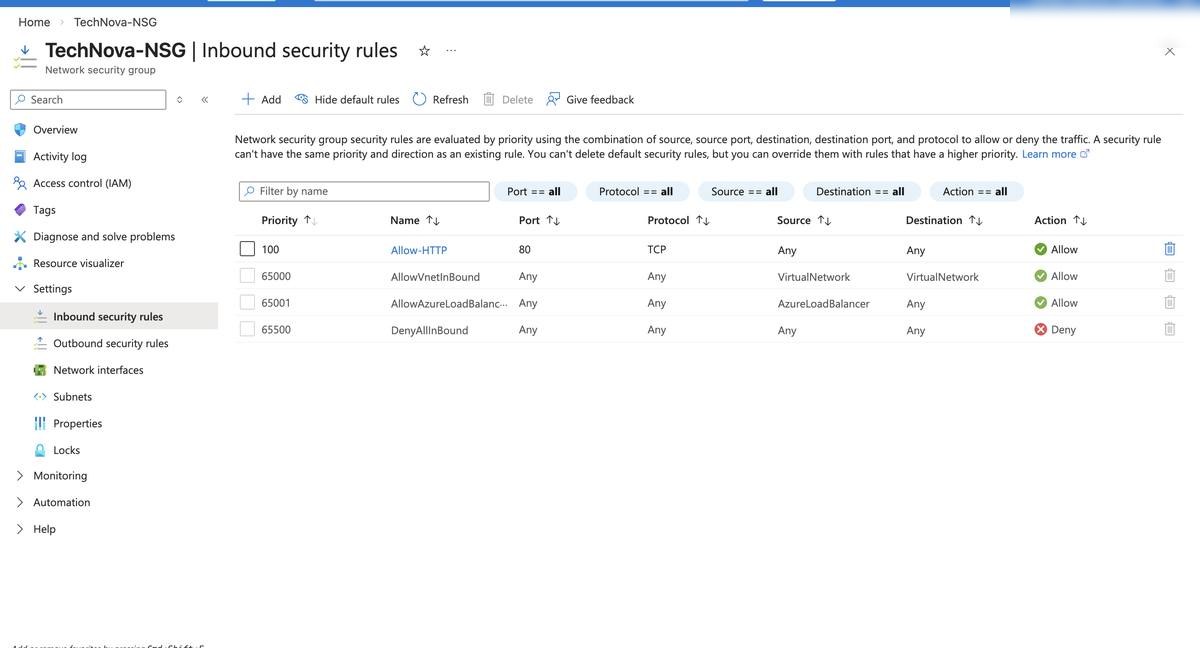
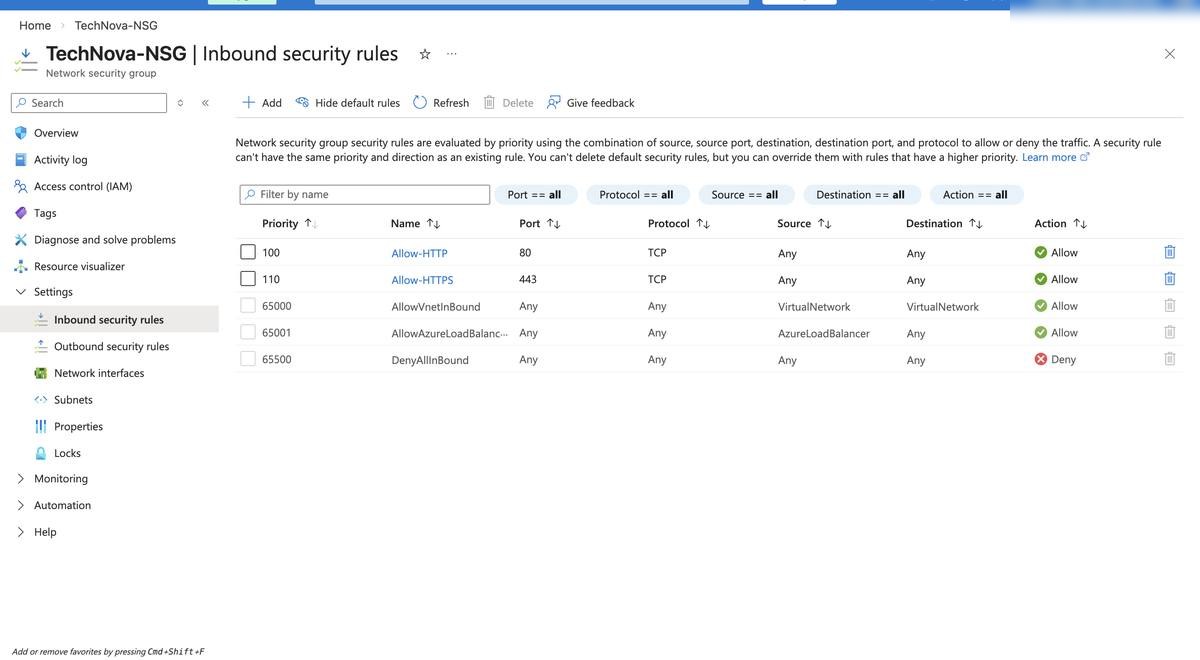
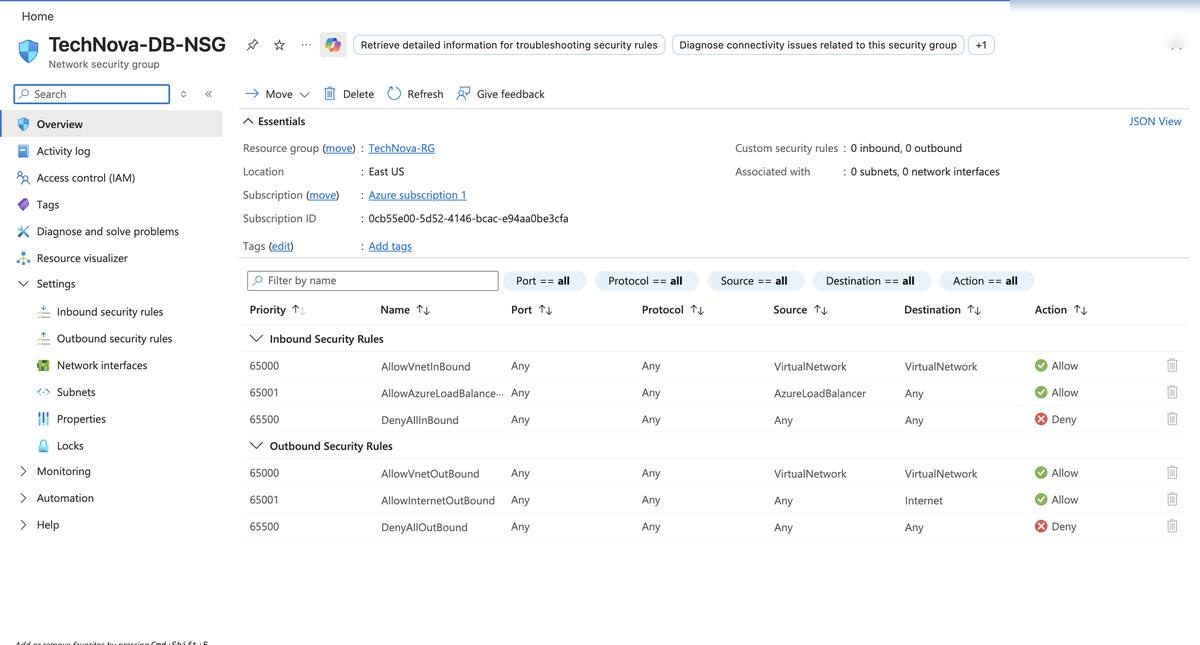
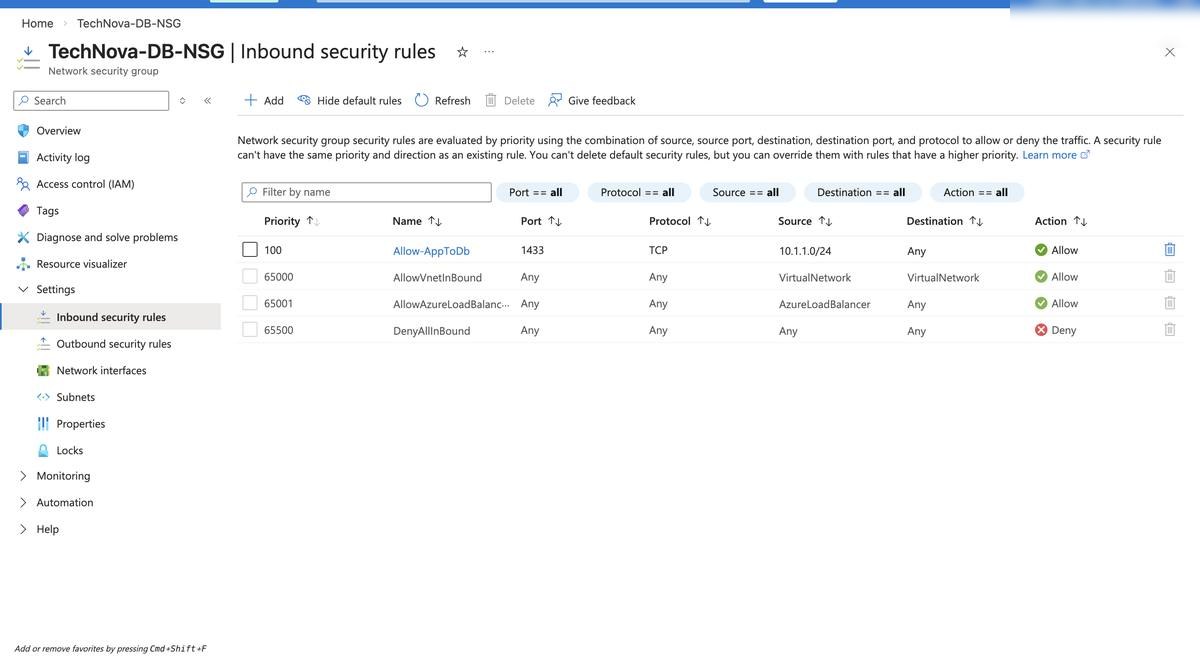
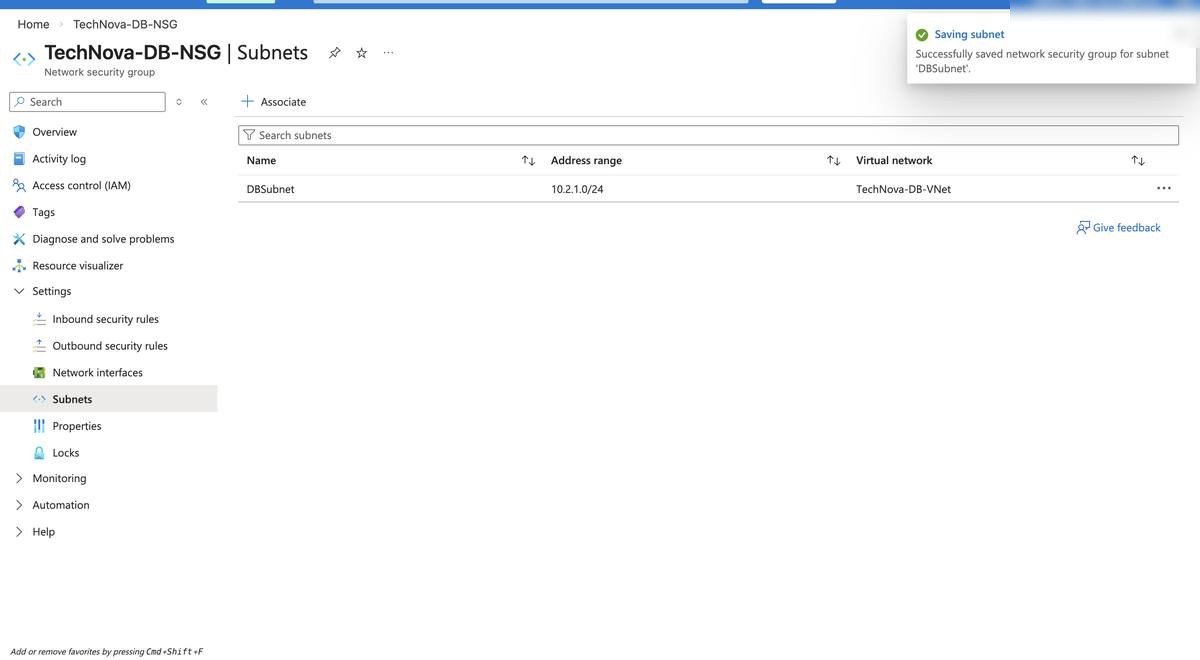
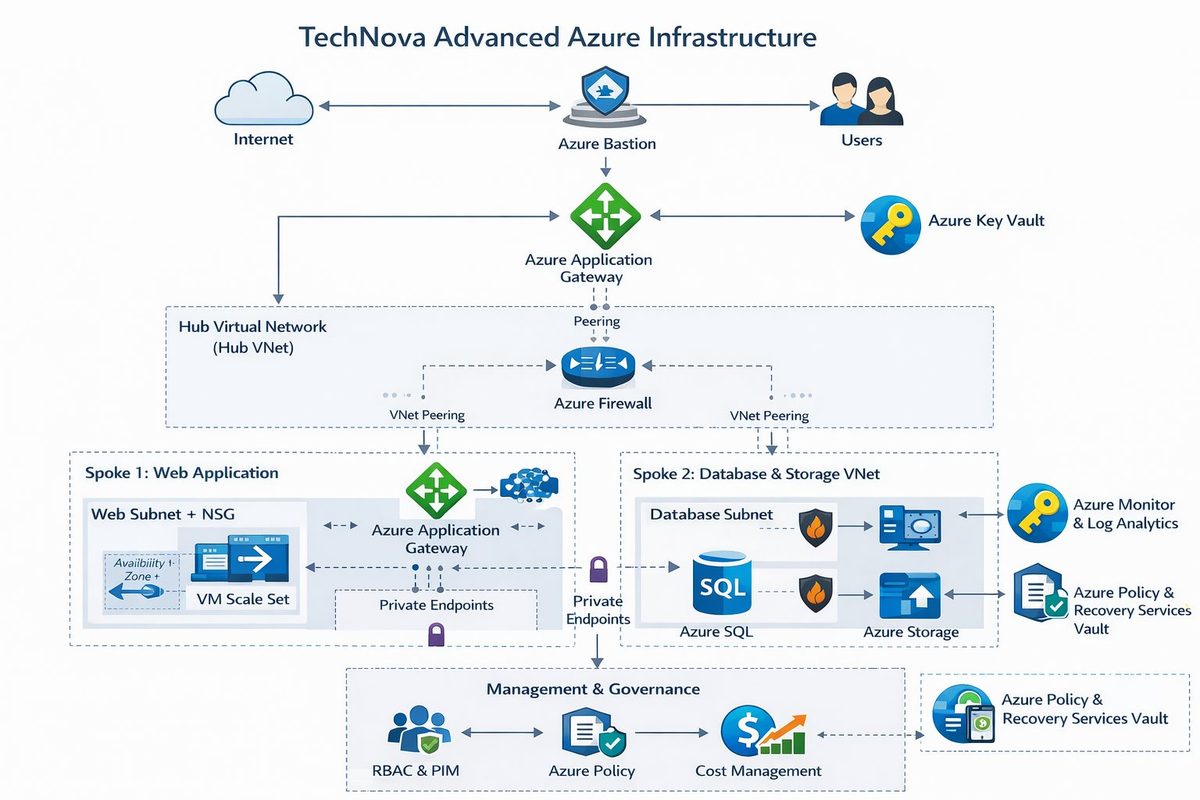
Three Virtual Networks were designed and deployed using the industry-standard hub-and-spoke pattern. The Hub VNet handles management traffic. Two Spoke VNets separate application and database workloads. VNet Peering connects them. NSGs lock down every subnet.
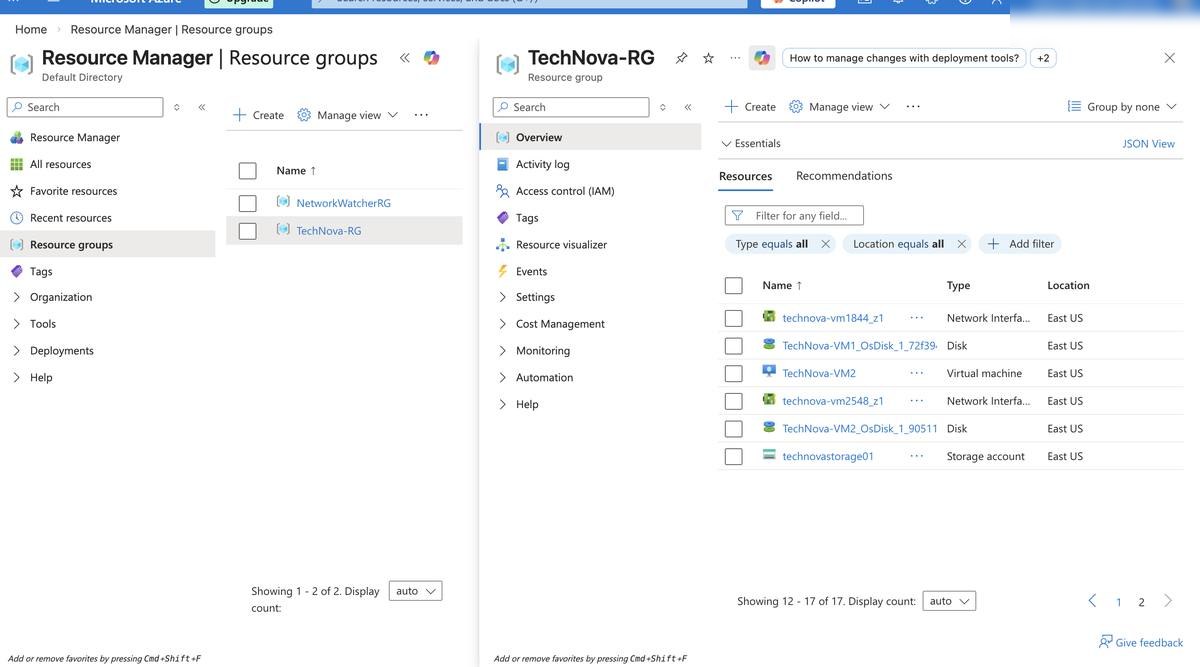
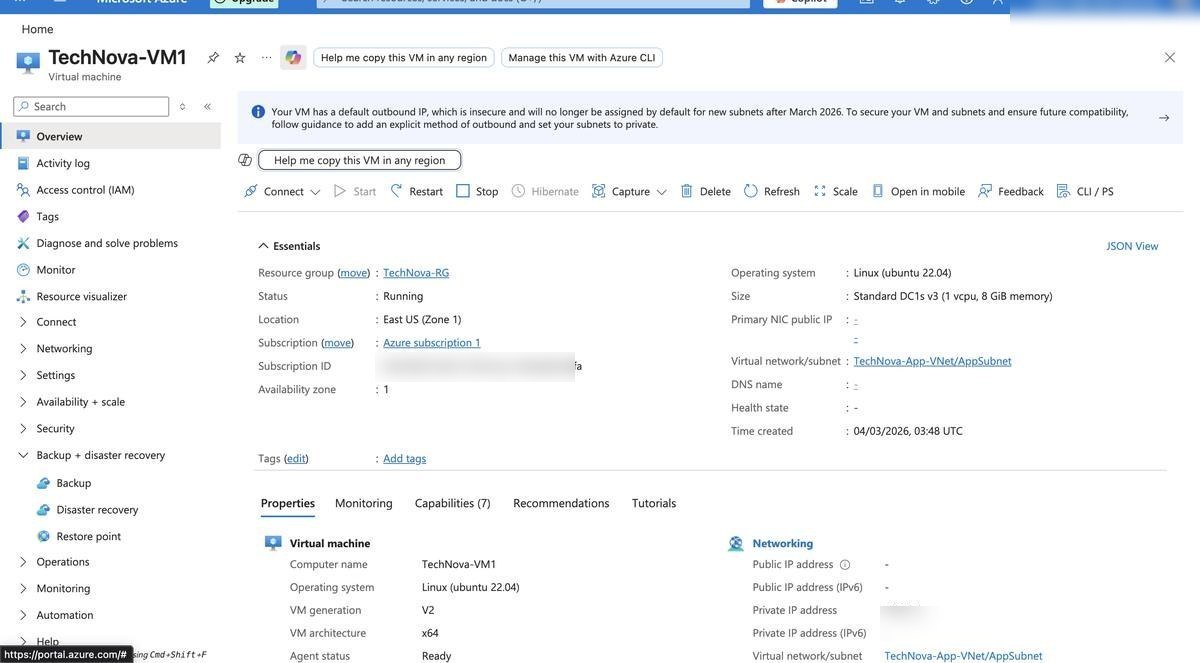
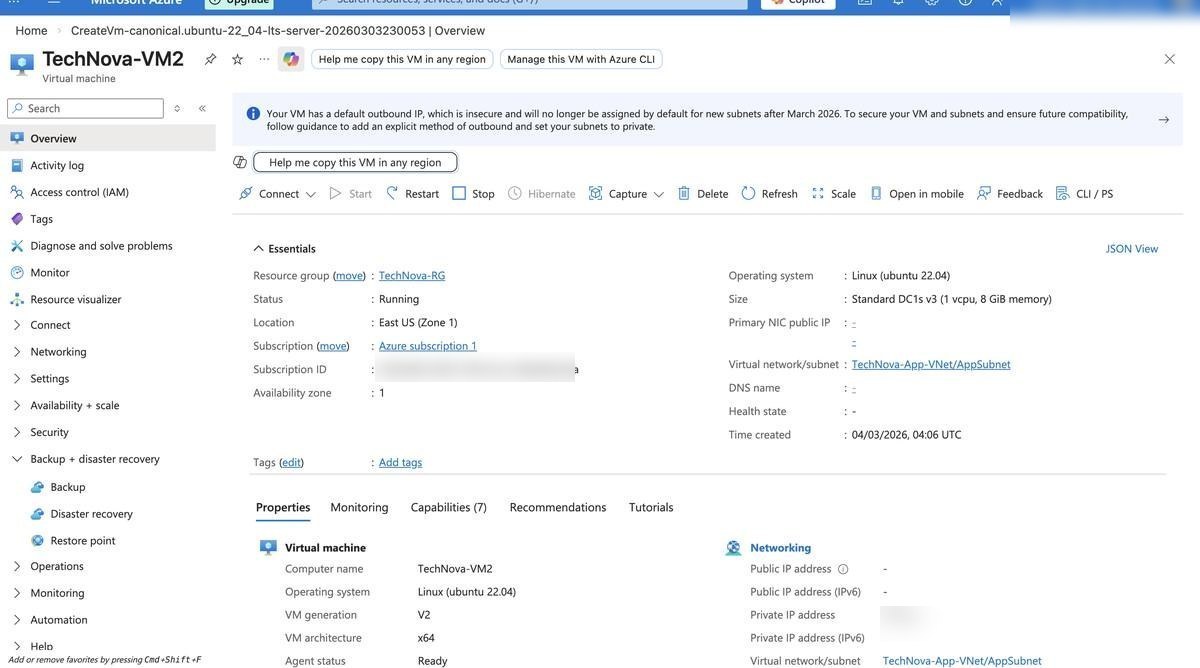
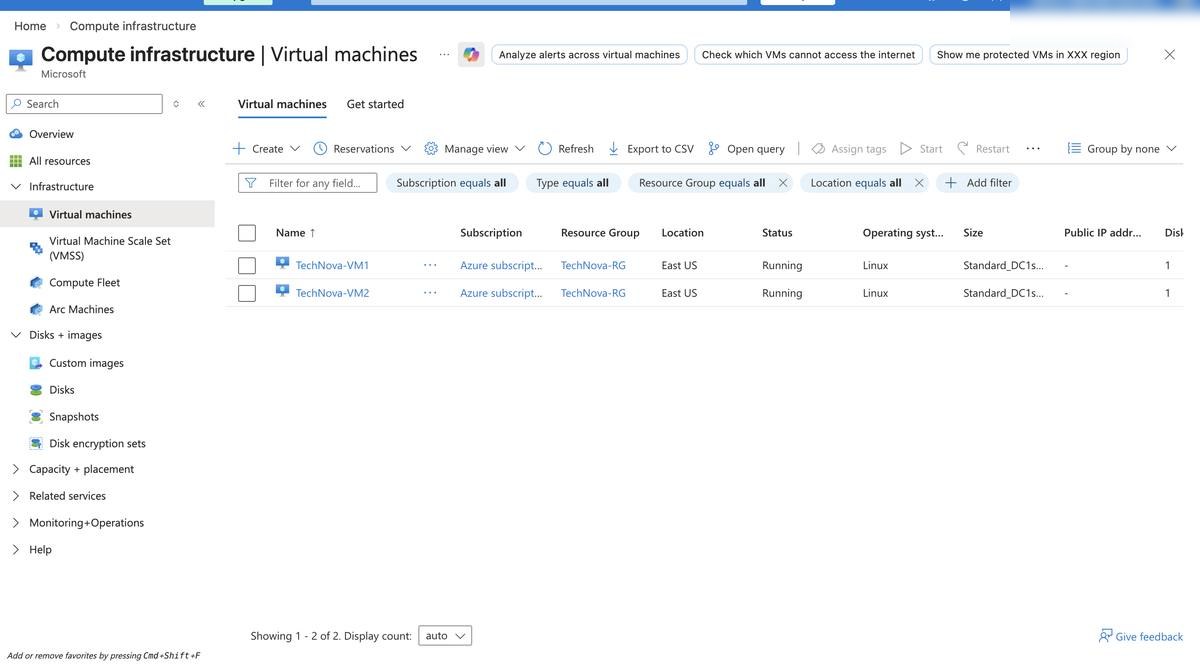
Two Linux VMs were deployed without public IPs on the VM NICs. Azure Bastion provides a secure browser-based management path. RBAC assignments were reviewed at resource scope, and Microsoft Defender for Cloud was included for security posture visibility.
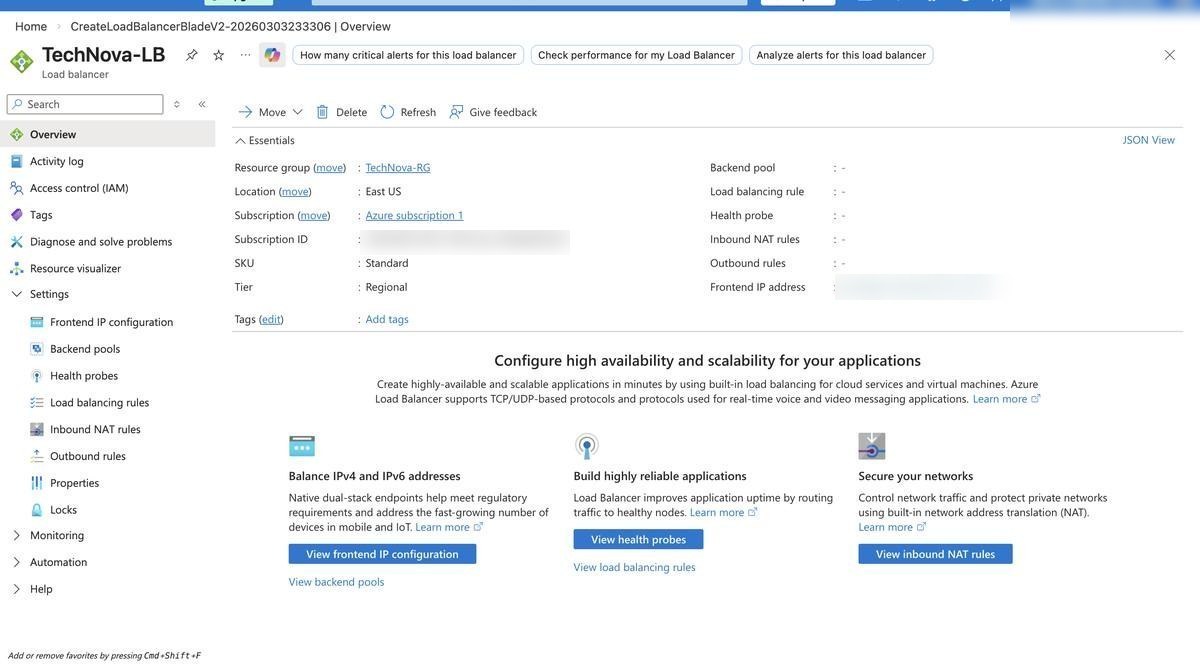
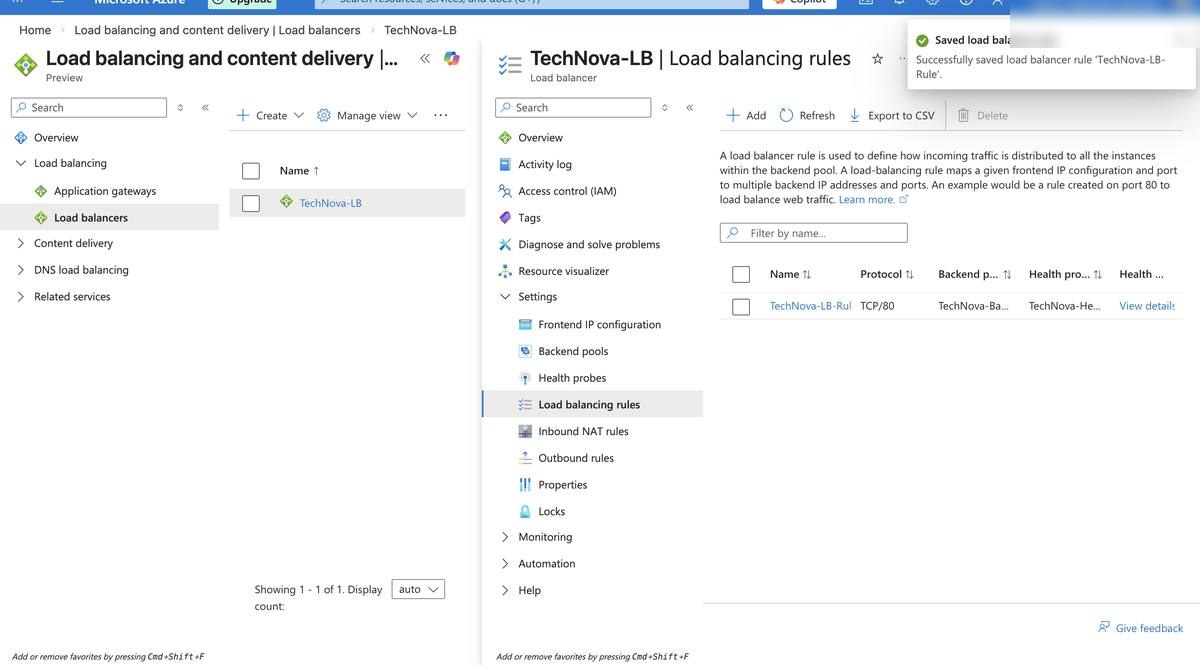
An Azure Load Balancer distributes traffic across both VMs with health probes checking backend availability. If a backend fails its probe, Azure Load Balancer can stop routing traffic to that unhealthy instance based on the configured rule.
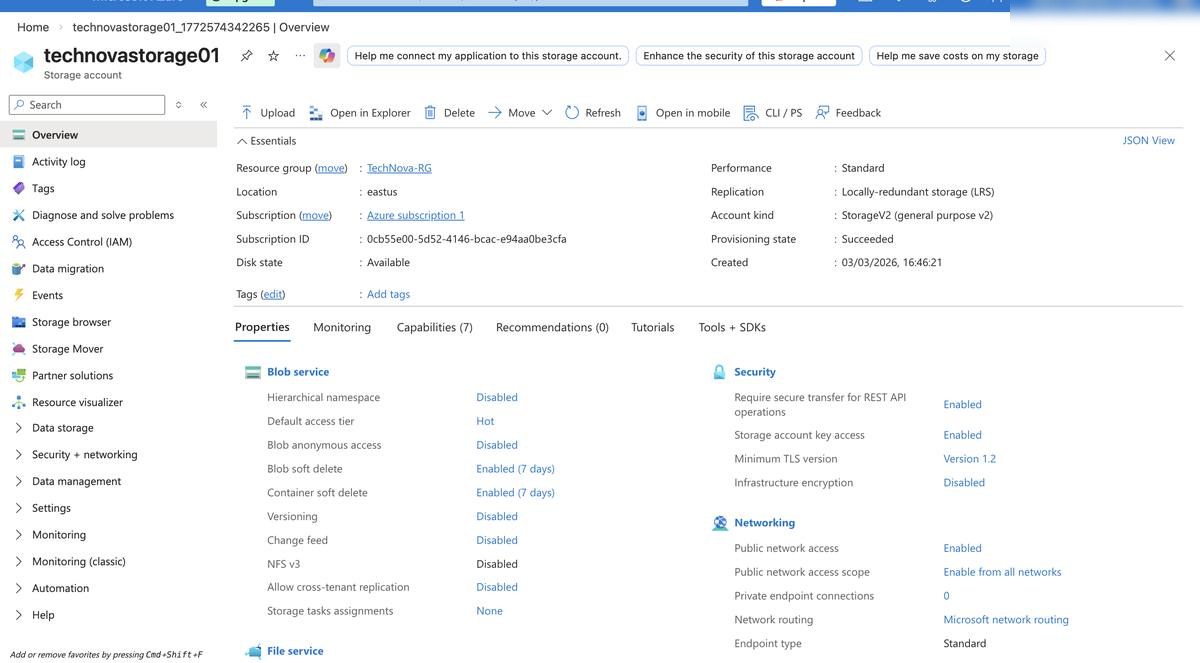
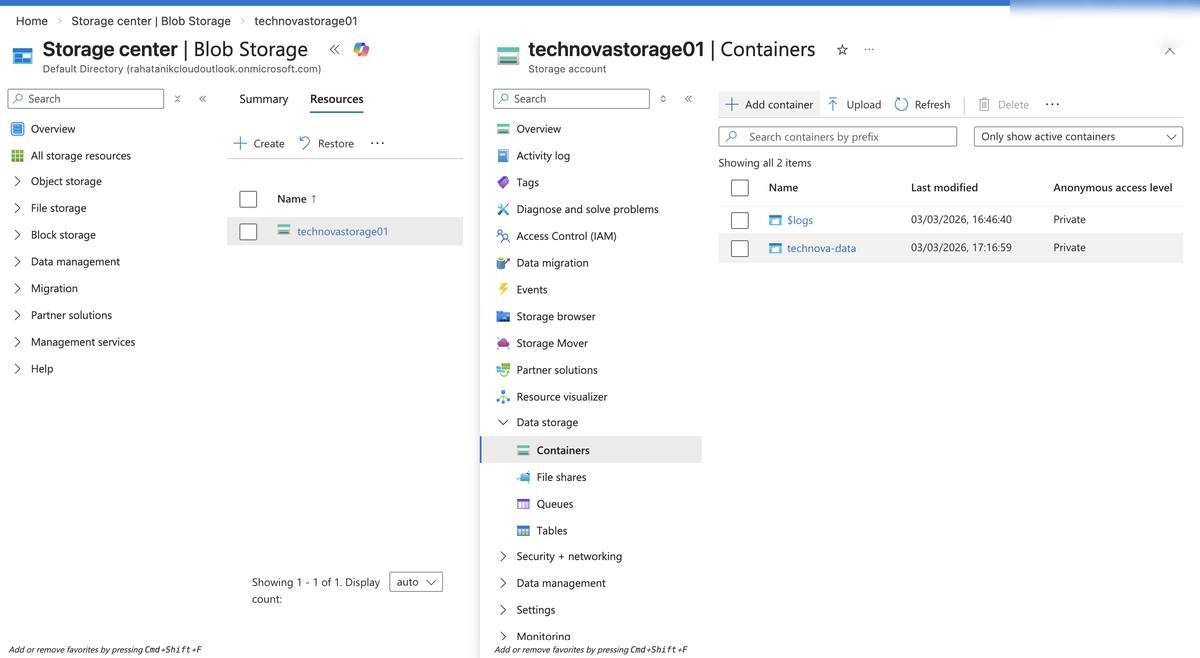
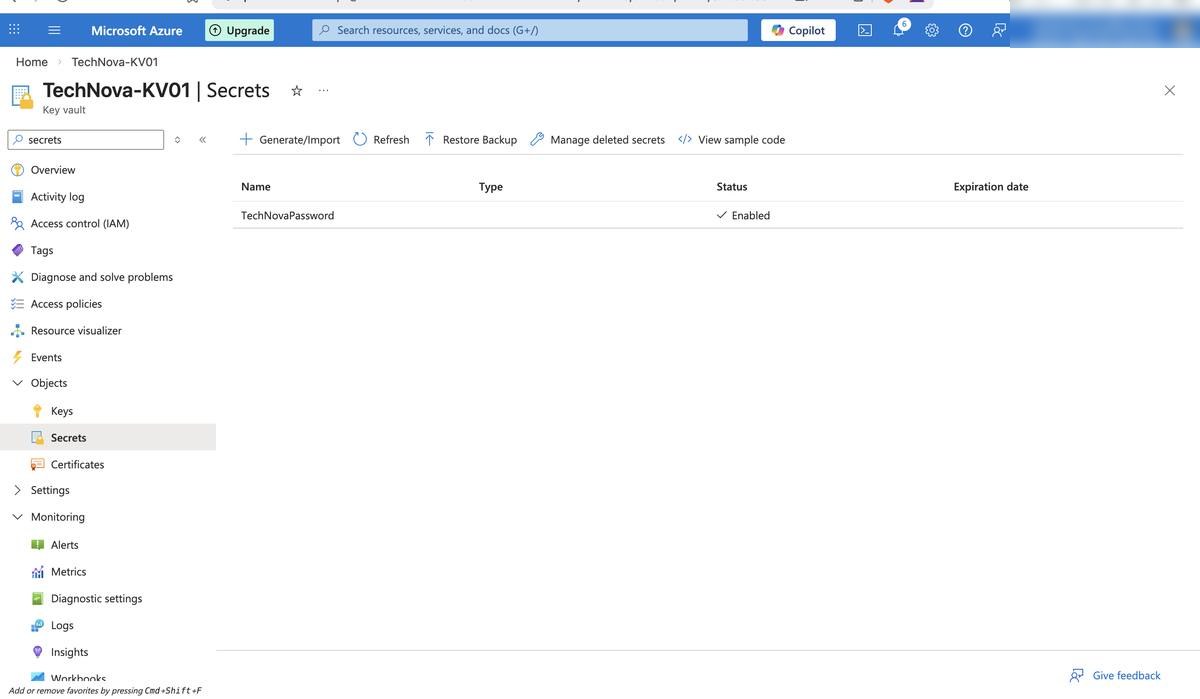
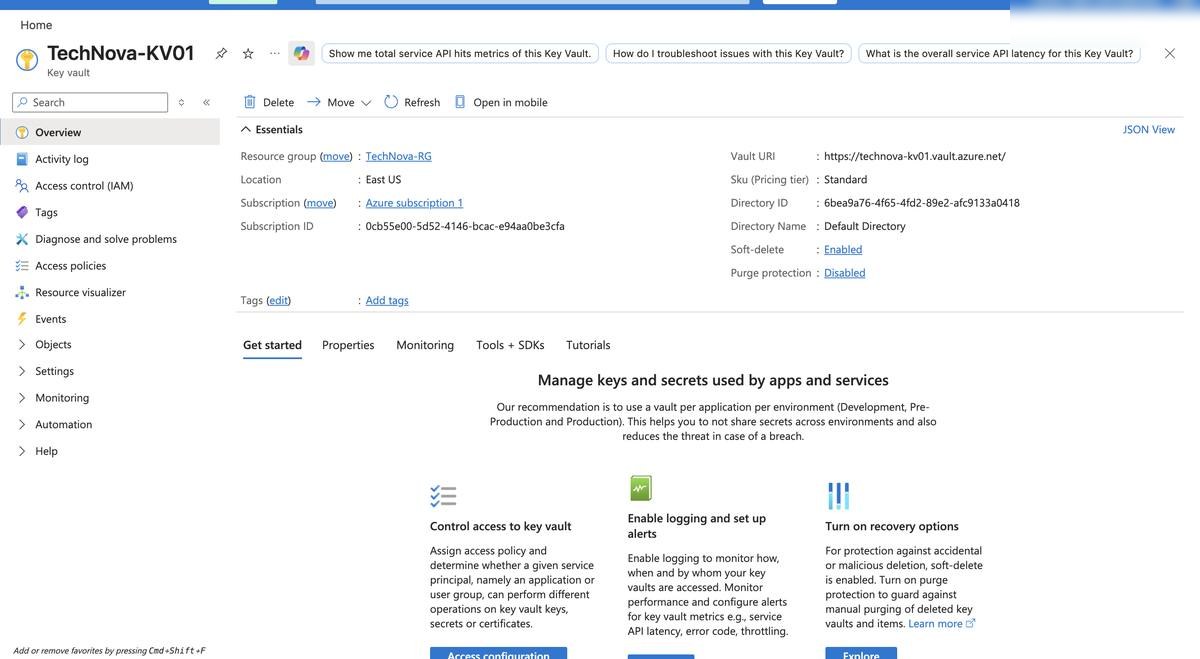
A Storage Account, Key Vault, Recovery Services Vault, and Azure Backup policy were configured to demonstrate data protection and recovery planning. Production use would still require restore testing, monitoring, and formal runbooks.
Skills demonstrated across this project:
TechNova demonstrates that I can take a blank Azure subscription, build a secure and segmented infrastructure foundation, document the evidence, and explain the production gaps a real team would close before go-live.